I went out back to be with language, and was, but also disassembled most of the cobwebbed electrical box that once powered the broken sprinklers, to get it out of the way before the painters come. I have to figure out where you switch off the current.
Fanny Howe hit the mark. We’d had a nodding acquaintance but this time something turned in the lock. The mystic’s concision. It made me think of childhood in the desert; M. texted photos from our old 7-11, which gives out free Slurpees once a year, and I remembered the planet at night that was its glowing sign, the only thing on that stretch of road. Saguaro arms shadowing the lot. It’s the intersection with Swan Road where Skyline terminates (and J., who is rereading the Aeneid, sent me a note that three-way intersections are ruled by Diana of the Crossroads).
The things I do at night follow me around the next day, warm and concealed. I have to be cautious of my phone, which will lead me back to them.
I feel sane, though, turning pages in the sun; and sanity has been awfully coy these past few months. It’s possible this is enough. One can go back inside and manage the second half of the basketball game.
I was right, I did worse.
There is not even solitude in the mountains
The title track from Sleater-Kinney, The Hot Rock. The counterfeit diamond, “It’s not real—you don’t need to tell me that it’s not real.” The sapphic thing, right, is to set the bar that high. That if it doesn’t drill down to the core of the earth it doesn’t count.
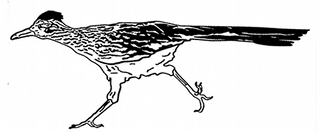
The fear I imagine as a small, quick bird alighting behind my sternum, dark-eyed and defenseless. To relieve its worry it scrapes its beak against my ribs. I have compassion for it, and would like to give it what it’s looking for.
A prominent example in the Wu-men-kuan is case no. 35 which reads simply, “Master Wu-tsu said, ‘Ch’ien and her soul are separated. Which one is the true soul?’” This case appears to be dealing with the philosophical topic of non-duality: how can a person be divided into component parts, such as body and soul, when she constitutes an indivisible collective unity? Yet, the case is just as clearly based on a famous T’ang legend recorded in the Li-hun chi, expressing the theme of duty versus passion (which later became such an important influence on Tokugawa literature). The folktale uses supernatural elements such as a spirit journey and bilocation in the story of a young woman who appears to her parents, who have resisted her wedding plans, to be sick and lifeless when she is separated for five years from the man she loves. Yet the “other Ch’ien” has run off with her lover and spent the time in a secret marriage. When she returns home out of a sense of responsibility for her family, Ch’ien is reunited with her tormented soul that was manifested in a body lying motionless in bed the entire time of her flight. Everyone, now purged of feelings of guilt and deception, is able to experience a sense of harmony and fulfilled responsibilities.
—Steven Heine, “Putting The ‘Fox’ Back in The ‘Wild Fox Kōan,’” Harvard Journal of Asiatic Studies 56 (1996).
A person belonging, at conception, to the sex that produces the large reproductive cell. At the moment of conception, the large reproductive cell produces the large reproductive cell. Which, in its turn, produces the large reproductive cell. In saecula saeculorum. Your haploid heart. The trouble with Tribbles.
Work goes on. It’s not not valuable?
Walking with L.L. yesterday, we passed the most beautiful magnolia in the sun, pods like fuzzy bears waving pink flags. Just about to drop their colors. Got you in a corner, got you in a cottage. Forward, fire.
There were a number of works, she said, executed when Bourgeois was the mother of small children, in which she portrays herself as a spider, and what is interesting about these works is not just what they convey about the condition of motherhood — in distinct contrast, she said, to the perennial male vision of the ecstatically fulfilled madonna — but also the fact that they appear to be children's drawings drawn in a child's hand. It is hard to think, she said, of a better example of female invisibility than these drawings, in which the artist herself has disappeared and exists only as the benign monster of her child's perception. Plenty of female practitioners of the arts, she said, have more or less ignored their femininity, and it might be argued that these women have found recognition easier to come by, perhaps because they draw a veil over subjects that male intellectuals find distasteful, or perhaps simply because they have chosen not to fulfil their biological destiny and therefore have had more time to concentrate on their work. It is understandable, she said, that a woman of talent might resent being fated to the feminine subject and might seek freedom by engaging with the world on other terms; yet the image of Bourgeois's spider, she said, seems almost to reproach the woman who has run away from these themes and left the rest of us stuck, as it were, in our webs.
—Rachel Cusk, Kudos
The skull in parts. The feeling that the bones have come unfused and the wind gets in.
…and with his erratic, irregular gait, as if he had pebbles in his shoes, he would make his way to dissolute Avenida Floral, that impertinent ramshackle avenue with its little rusting houses, where prostitutes, transsexuals, and young homosexuals stood leaning, shielded by the lampposts’ dim light, and the food carts and the little windows of the stores. Immune to the air, the cold, the fear, Katzuo crossed the gas station goaded on by delight, approached the open lots, and stationed by the wall, there in the street, hallucinatory, he stared captivated…
Augusto Higa Oshiro, The Enlightenment of Katzuo Nakamatsu, tr. Jennifer Shyue
There is something new on those particular blocks of Market or Telegraph—in good lighting, of course, when the danger radar isn’t going off. The weird ease of knowing what kind of trash you are, that it’s exactly the trash one is supposed to find in these neighborhoods.